It looks like somebody is has taken the step I never did and started the process of building a user designed CCG.
I've only given the forum a cursory look, and already the drift seems to be towards the Magic model -> expansions, set rotation, etc. I certainly plan on stirring the pot a little bit.
Check it out!
-Adam!!!
Tuesday, June 26, 2007


Wednesday, June 20, 2007
All Barriers Big and Small
Ideas that go viral are the sort that spread easily. Some of the best ideas in the world never gain traction because even the most enthusiastic supporters can't explain them. Most people don't embrace things they don't understand. Even if folks do 'get it', price, complexity, and the ever present catch-22 of 'if it's popular, I'll buy it, but not before' issue can all be stumbling blocks in the success of a product.
When Magic was released in 1994, the barriers were low. The game was complex, but not too complex. The cards were cheap. Players were EVERYWHERE. It was a lot of fun! In hindsight, it's not too surprising that the game took off.
Fast-forward 10 years. Now the game is (or at least seems) very complex. Ten years of new rules, rules revisions, additional cards and abilities have created what appears to be a hard game to learn. Barrier. The cards are no longer cheap. While the cost has only gone up a bit, per card, you now must buy hundreds-to-thousands to compete with any existing player. Barrier. Players are harder to find, outside of tournaments. Barrier. Tournaments are hyper competitive affairs, focusing on prizes and victory more than fun. Barrier (to many). It's easy to see why it's harder to find new Magic players now than it used to be.
In the eyes of the general public, I think these same concerns bleed over to all trading card games (fairly or not) and publishers should take pains to address them, at least internally, when releasing a new collectible type game.
What barriers does your game have? What might crop up if it succeeds?
-Adam!!!
When Magic was released in 1994, the barriers were low. The game was complex, but not too complex. The cards were cheap. Players were EVERYWHERE. It was a lot of fun! In hindsight, it's not too surprising that the game took off.
Fast-forward 10 years. Now the game is (or at least seems) very complex. Ten years of new rules, rules revisions, additional cards and abilities have created what appears to be a hard game to learn. Barrier. The cards are no longer cheap. While the cost has only gone up a bit, per card, you now must buy hundreds-to-thousands to compete with any existing player. Barrier. Players are harder to find, outside of tournaments. Barrier. Tournaments are hyper competitive affairs, focusing on prizes and victory more than fun. Barrier (to many). It's easy to see why it's harder to find new Magic players now than it used to be.
In the eyes of the general public, I think these same concerns bleed over to all trading card games (fairly or not) and publishers should take pains to address them, at least internally, when releasing a new collectible type game.
What barriers does your game have? What might crop up if it succeeds?
-Adam!!!
Saturday, June 09, 2007
Hang Six, Baby!
I took my son to see Surf's Up today. Honestly, he didn't like it very much. Jennifer and I loved it. First off, it had a lot of slacker humor, which I really enjoy (all it takes is meeting me to see why). Second, The Geek was voiced by Jeff Bridges in what amounts to a reprise of his Big Lebowski role, The Dude. It was like buttah.
In the genre of CGI films, I rate it below everything Pixar and the Shreks, but above everything else.
-Adam!!!
In the genre of CGI films, I rate it below everything Pixar and the Shreks, but above everything else.
-Adam!!!
Friday, June 08, 2007
Four Copy Rip-Off
I'm babbling about trading card games again. I've covered this before, but not for a long while.
Whoever decided it would be a good idea to limit the number of cards allowed in a a deck was a moron. (I actually know who thought it was a good idea, back in the early Magic days, and he wasn't a moron, but...)
Marketing Disaster - Successful TCGs have a uncanny power to drive repeat sales. Buy, buy, buy! It's a sales and marketing dream. Of course, if each player can only use four copies of each card, that sets a cap on how many cards are useful to a player. You've just told a customer that they shouldn't buy any more. It's like Coke making a soft-drink that stopped tasting good and quenching thirst after the fourth can...
Value Disaster - TCGs always have rares (which I also don't approve of, generally) which means to get four of a particular rare by openening booster packs, you normally end up with 30-40 copies of every common. By telling the player they can't use that many copies, the seller is effectively devaluing those commons to an amount close to ZERO. Players have figured this out, and the TCG market has suffered. Companies have not, and the TCG market has suffered.
Game Balance Disaster - The reason cards are limited to 1, 4, 6, or whatever, is because game-balance is put a risk if too many copies of a "Bad" card are released into the pool. I suggest making better games, where this is accounted for from conception to finished product. Unlike the previous two points, this is easier said than done. NOT IMPOSSIBLE.
My point to future TCG publishers. Stop trying to squeeze players by charging them for cards you know...FOR A FACT....they don't want or need, so they'll get those precious rares. Make ALL the cards useful ALL the time. Attached to a quality game, a sales goldmine waiting to happen.
-Adam!!!
Whoever decided it would be a good idea to limit the number of cards allowed in a a deck was a moron. (I actually know who thought it was a good idea, back in the early Magic days, and he wasn't a moron, but...)
Marketing Disaster - Successful TCGs have a uncanny power to drive repeat sales. Buy, buy, buy! It's a sales and marketing dream. Of course, if each player can only use four copies of each card, that sets a cap on how many cards are useful to a player. You've just told a customer that they shouldn't buy any more. It's like Coke making a soft-drink that stopped tasting good and quenching thirst after the fourth can...
Value Disaster - TCGs always have rares (which I also don't approve of, generally) which means to get four of a particular rare by openening booster packs, you normally end up with 30-40 copies of every common. By telling the player they can't use that many copies, the seller is effectively devaluing those commons to an amount close to ZERO. Players have figured this out, and the TCG market has suffered. Companies have not, and the TCG market has suffered.
Game Balance Disaster - The reason cards are limited to 1, 4, 6, or whatever, is because game-balance is put a risk if too many copies of a "Bad" card are released into the pool. I suggest making better games, where this is accounted for from conception to finished product. Unlike the previous two points, this is easier said than done. NOT IMPOSSIBLE.
My point to future TCG publishers. Stop trying to squeeze players by charging them for cards you know...FOR A FACT....they don't want or need, so they'll get those precious rares. Make ALL the cards useful ALL the time. Attached to a quality game, a sales goldmine waiting to happen.
-Adam!!!
Thursday, June 07, 2007
Are you happy you bought it?
Board games have an advantage over trading card games and miniatures games (not many, but this is one.) Once you purchase and play a board game, if you don't like it, it's pretty much too late. If you really don't like the game, you might think twice before purchasing again from that publisher, but really each game is independent, so quality varies greatly, even from particular designers.
With a strong license, good word of mouth, or a powerful marketing campaign, enough people might buy a bad board game and it'll still make money. Even if the the game is terrible, it'll still be in the game closet, fully playable.
With trading cards the games require that the fans buy into the game and not only purchase the 'base' game, but also expansions in the form of boosters. If the buyer doesn't like the game, they won't follow up with more purchases, won't play the game *at all* and likely won't find opponents even if they wanted to play.
Moral of the story: Don't make a trading card game unless you really think your fans-to-be will be moved to purchase boosters. 99% of the time, they won't. On the up-side, if you're a 1%-er, you're probably going to get rich!
-Adam!!!
With a strong license, good word of mouth, or a powerful marketing campaign, enough people might buy a bad board game and it'll still make money. Even if the the game is terrible, it'll still be in the game closet, fully playable.
With trading cards the games require that the fans buy into the game and not only purchase the 'base' game, but also expansions in the form of boosters. If the buyer doesn't like the game, they won't follow up with more purchases, won't play the game *at all* and likely won't find opponents even if they wanted to play.
Moral of the story: Don't make a trading card game unless you really think your fans-to-be will be moved to purchase boosters. 99% of the time, they won't. On the up-side, if you're a 1%-er, you're probably going to get rich!
-Adam!!!
Playstation Thrii
The media's starting to jump all over the PS3 and how it's failing compared to the Wii and the Xbox360. I admit it, even though I was a faithful Sony fan (PS1 and PS2 owner) the PS3 was simply too expensive to buy. It's funny, because when you say that, I always get the same responses:
It plays Blue-Ray
It plays DVDs
It Plays PS2 Games
You get the On-Line Service for Free
Look at the graphics!
If you add it all together, it's worth what you pay.
No. It isn't. I don't want any of those things, except for the graphics and the on-line service (which Wii purports to support, but so far, nuthin!)
I'll go on record as saying I don't get Blue-Ray or HDDVD. It's easy to see why CDs are better than tapes and records. It's really easy to see why DVDs are better then VHS. I don't see any reason AT ALL to ditch DVDs for the new, 'better' format. How clear does the picture need to be? Yes, I have an HDTV, though granted an older one.
Somebody please explain why my DVD collection needs replaced? Also, Super Mario Party 8 on the Wii is mucho-fun-O!
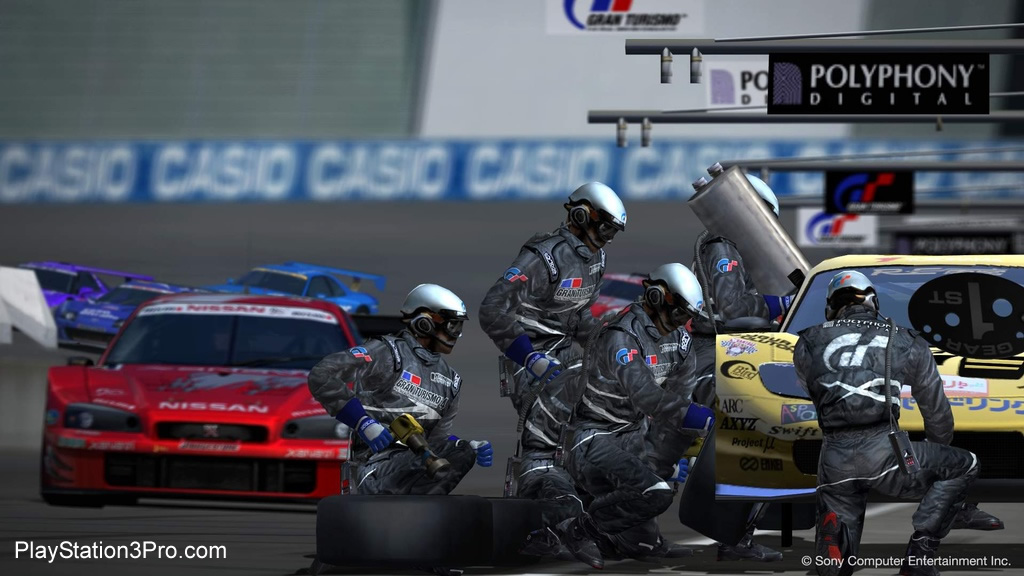
As for the PS3. It'll only really hurt when Grand Turismo 5 is released. Oooooooh...that's going to hurt a LOT.

-Adam!!!
It plays Blue-Ray
It plays DVDs
It Plays PS2 Games
You get the On-Line Service for Free
Look at the graphics!
If you add it all together, it's worth what you pay.
No. It isn't. I don't want any of those things, except for the graphics and the on-line service (which Wii purports to support, but so far, nuthin!)
I'll go on record as saying I don't get Blue-Ray or HDDVD. It's easy to see why CDs are better than tapes and records. It's really easy to see why DVDs are better then VHS. I don't see any reason AT ALL to ditch DVDs for the new, 'better' format. How clear does the picture need to be? Yes, I have an HDTV, though granted an older one.
Somebody please explain why my DVD collection needs replaced? Also, Super Mario Party 8 on the Wii is mucho-fun-O!
As for the PS3. It'll only really hurt when Grand Turismo 5 is released. Oooooooh...that's going to hurt a LOT.
-Adam!!!
Wednesday, June 06, 2007
Squidoo, Part Two (Woo Hoo?)
I'm still not sure how successful www.squidoo.com is. I've set up several lenses and they get some traffic. The Bella Sara Lens gets around 400-600 hits per week, which is by far my most successful. Roughly 100x the traffic of any other lens I've built.
Here at Hidden City Games we're hoping that fan sites for Bella Sara start popping up, but even more so than our old game, Clout, the user-base for Bella Sara doesn't seem to interested in Web 2.0. Oh well. I suspect that's to be normal when dealing with what is really a product for youngsters.
While doing a web search, a Bella Sara Facebook site came up, and while I'm a little dubious of that sort of format, I added a link to the Facebook site to my Squidoo site. So far, I can't tell if anyone from the either site has checked out the other. I wish I could. I do know my Squidoo site's rating fell from #111 (out of 150,000) to the mid 900's since adding the Facebook link. I worry that there's a connection. Normally when I add content and links, the lensrank goes up slightly. No so much this time.
-Adam!!!
Here at Hidden City Games we're hoping that fan sites for Bella Sara start popping up, but even more so than our old game, Clout, the user-base for Bella Sara doesn't seem to interested in Web 2.0. Oh well. I suspect that's to be normal when dealing with what is really a product for youngsters.
While doing a web search, a Bella Sara Facebook site came up, and while I'm a little dubious of that sort of format, I added a link to the Facebook site to my Squidoo site. So far, I can't tell if anyone from the either site has checked out the other. I wish I could. I do know my Squidoo site's rating fell from #111 (out of 150,000) to the mid 900's since adding the Facebook link. I worry that there's a connection. Normally when I add content and links, the lensrank goes up slightly. No so much this time.
-Adam!!!
Tuesday, June 05, 2007
Fourth Option - Softcore Games
Softcore is icky sounding. Really, I'm talking about commodity games.
While I technically specified hobby games in my last post, I did forget about commodity games. That is, games produced by the big toy & game publishers for the mass market. These games aren't hits, don't really have a following, but are reasonably profitable in any case. Games that serve one purpose, appeal to people who want 'a game' but that's where their interest and knowledge ends.
In my cupboard, right now, there are two jars of peanut butter. A nearly empty jar of Jif and an unopened jar of Skippy. I have no idea what the difference between these two jars is, other than how much scrumptious peanut butter remains. Go to Toys R Us and check out the game section. You'll certainly fine some fine games and bona fide hits (viral successes). You'll also see a collection of games that sell primarily because they happen to be sold in big stores like Toys R Us. They're like my peanut butter. Nothing special, and designed for people who don't care about differences between them any more than I care about the difference between Jif and Skippy.
I'm talking about Operation, Payday, Trouble, Sorry!, and all the games that surely sell, but don't really have a following and aren't going to be replacing Monopoly anytime soon on the "All Time Best Seller" list. Even if somebody wanted to, I don't think it's possible for an individual to create a new game in this category. The market is already full and firmly controlled by the big players (Hasbro, mostly). Even they have trouble adding to the stable, and typically rely on old games dressed up with a shiny new licenses to keep the catalog fresh. (It's a good strategy! I don't blame them a bit!)
When I worked for Hasbro (ala Wizards of the Coast) we believed that most of these games were bought as gifts and seldom played. I tend to think that was largely accurate.
This all reminds me, I need to bid on The Magnificent Race on e-bay. I loved that game as a kid!
-Adam!!!
While I technically specified hobby games in my last post, I did forget about commodity games. That is, games produced by the big toy & game publishers for the mass market. These games aren't hits, don't really have a following, but are reasonably profitable in any case. Games that serve one purpose, appeal to people who want 'a game' but that's where their interest and knowledge ends.
In my cupboard, right now, there are two jars of peanut butter. A nearly empty jar of Jif and an unopened jar of Skippy. I have no idea what the difference between these two jars is, other than how much scrumptious peanut butter remains. Go to Toys R Us and check out the game section. You'll certainly fine some fine games and bona fide hits (viral successes). You'll also see a collection of games that sell primarily because they happen to be sold in big stores like Toys R Us. They're like my peanut butter. Nothing special, and designed for people who don't care about differences between them any more than I care about the difference between Jif and Skippy.
I'm talking about Operation, Payday, Trouble, Sorry!, and all the games that surely sell, but don't really have a following and aren't going to be replacing Monopoly anytime soon on the "All Time Best Seller" list. Even if somebody wanted to, I don't think it's possible for an individual to create a new game in this category. The market is already full and firmly controlled by the big players (Hasbro, mostly). Even they have trouble adding to the stable, and typically rely on old games dressed up with a shiny new licenses to keep the catalog fresh. (It's a good strategy! I don't blame them a bit!)
When I worked for Hasbro (ala Wizards of the Coast) we believed that most of these games were bought as gifts and seldom played. I tend to think that was largely accurate.
This all reminds me, I need to bid on The Magnificent Race on e-bay. I loved that game as a kid!
-Adam!!!
Viral, Hardcore, or Vanish
All hobby games (not video/computer games) go viral, go hardcore, or vanish.
Viral – Enough people play that the game becomes a staple of play in gaming settings. Examples include: Dungeons & Dragons, Magic, Pokemon, Settlers of Catan, Risk, Monopoly, HeroClix. Board games don’t tend to go viral with the same energy as collectible games, but I do believe the all the top selling board-games owe their success largely to a viral-type effect. Nowadays many games are designed from the outset to go viral, and if they don't their failure is assured. Games from big publishers that are canceled quickly almost always fall into this category.
Hardcore – Relatively small fan-base, but large enough to sustain the game provided their needs are met. Precarious situation because new fans are hard to attain and the existing fans are hard to keep. Nearly all games (all things, really) have a hardcore following to some degree. Hardcore games are often discussed online far more than they are played (because they never went viral, opponents are hard to find.) When games are designed to be hardcore games, they can be very successful whether or not they go viral. It is more difficult for a publisher to support a game designed to go viral but instead gained a hardcore audience. Hardcore friendly games are easier to create because almost anything can achieve some level of hardcore following. The only question, is the following big enough and spendy enough to support the game? Spendy fans are often important to the Hardcore game. The more you charge, the less you have to sell to make a profit and the smaller your Hardcore audience has to be in order for the game to succeed.
Vanish – Cease to be published. In some cases a game is meant to be a limited run, so vanishing isn’t always a failure. Usually the goals of the publisher haven’t been met and it’s obvious they never will be.
Many games aren’t designed from the outset to ‘go viral’ or ‘go hardcore’, but in hindsight it’s usually easy to see why games had the success or failure they had. TCGs are largely dependent on going viral for success, and tend to be designed with that purpose in mind. Most RPGs, on the other hand, are designed for hardcore success only.
On the other hand, making something go viral is relatively hard to so (despite what the viral marketing books tell you!)
-Adam!!!Wednesday, November 15, 2006
Vacation with the Mouse!
I freely admit I should have told more people I was going on Vacation, but since I was only missing Friday, Monday, and Tuesday, I didn't think I'd be missed. =-)
You've got to hand it to Disney. In a lot of ways, I'm in the same buisness they are. We both sell fun. The Disneyland fun machine is a work of art (literally, in a lot of ways.) I know it's not the same for everyone, but as soon as I walk through the tunnel onto Main Street USA, I've got a huge smile on my face. Part of it is nostalgia. I first went to Disneyland in 1976, for the bicentennial celebration. I was 6. The sights, the sounds, and particularly (this may sound weird) the smells of Disneyland bring me right back to the best parts of my childhood. I don't know if its the same for folks who go for the first time as adults, but from the smiles, I'd say it's still pretty good.
If you have a 5-10 year old, and you can afford to go to Disneyland or Disneyworld, GO. They'll love it now, and they'll love it again in 20-30 years when they take their children.
If you went to Disneyland as a kid like I did, and want to relive some of those memories check out my favorite Disney fan site, Yesterland.
-Adam!!!
You've got to hand it to Disney. In a lot of ways, I'm in the same buisness they are. We both sell fun. The Disneyland fun machine is a work of art (literally, in a lot of ways.) I know it's not the same for everyone, but as soon as I walk through the tunnel onto Main Street USA, I've got a huge smile on my face. Part of it is nostalgia. I first went to Disneyland in 1976, for the bicentennial celebration. I was 6. The sights, the sounds, and particularly (this may sound weird) the smells of Disneyland bring me right back to the best parts of my childhood. I don't know if its the same for folks who go for the first time as adults, but from the smiles, I'd say it's still pretty good.
If you have a 5-10 year old, and you can afford to go to Disneyland or Disneyworld, GO. They'll love it now, and they'll love it again in 20-30 years when they take their children.
If you went to Disneyland as a kid like I did, and want to relive some of those memories check out my favorite Disney fan site, Yesterland.
-Adam!!!
Thursday, July 06, 2006
Lo-Res Copyright question
As resolution decreases, the integrety of an image decreases along with it. At what point does a painting or photograph alter so much that claim of ownership is lost? Is it one pixel? Is it the point where the average viewer can no longer recognize the image? Is it less strict than that? Can changing your screen res put a piece of art into the public domain?
As an artist do you care if somebody takes your work and turns it into a 80 by 80 icon? Is it still the same piece of art that you painted? Is it still your art at 240 by 240? at 5 x 5?
At what resolution is everything public domain?
As an artist do you care if somebody takes your work and turns it into a 80 by 80 icon? Is it still the same piece of art that you painted? Is it still your art at 240 by 240? at 5 x 5?
At what resolution is everything public domain?
Friday, June 23, 2006
Shiny and Deep...Games
For this to make sense, you must first read the Shiny and Deep entry on Seth Godin's Blog.
Most hobby games are, by nature, deep. They require a great deal of thought and effort to learn, play, and master. (I'm lucky if I ever get past learn.) This usually means the marketing person or department of the publisher has to work very hard to 'Shiny' these games up for market. In the last few years many publishers have done a great job, particularly with Eurogames. These games are, in general, as gorgeous as they are engaging. It's part of the reason Eurogames have become so successful in the last couple of years.
The old saying, you can't polish a turd, is also true. Hobby gamers demand depth in their games, and anything less better be a) fun for their non gamer friends and loved ones or b) very, very inexpensive. This is why good design always, always, always must be a priority. Non-gamers trying to publish and sell games often don't get that. Just ask early 90's TSR...the bankrupt TSR.
Collectible games used to be Shiney, but the fatigue of playing them has certainly tarnished their luster. This is why most new CCGs depend on licenses to get off the ground. Publishers believe licenses are the only means to support a CCG until it's fanbase grows large enough to sustain a community. Community for CCGs is essential. Licenses are also a shiney lure to publishers who might not have a strong design, but think a game can survive on the bright sheen of the license alone. When I worked for Wizards of the Coast I used to joke that licenses were like a big piece of candy. The candy was so bright and appealing that we'd gobble the candy down. When the inevitable tummy ache followed we's swear we'd not do it again...until the next piece of candy presented itself. Honestly, every year the new strategy for the company was to move away from licences and every year they'd sign between 1-3 licensing deals.
I used to think the game industry is unique. It's not unique, but like all industries you have to understand it in order to succeed in it. I try to gain a little understanding every day.
What makes a game stand out to you? What makes you happy you bought it six months later?
Most hobby games are, by nature, deep. They require a great deal of thought and effort to learn, play, and master. (I'm lucky if I ever get past learn.) This usually means the marketing person or department of the publisher has to work very hard to 'Shiny' these games up for market. In the last few years many publishers have done a great job, particularly with Eurogames. These games are, in general, as gorgeous as they are engaging. It's part of the reason Eurogames have become so successful in the last couple of years.
The old saying, you can't polish a turd, is also true. Hobby gamers demand depth in their games, and anything less better be a) fun for their non gamer friends and loved ones or b) very, very inexpensive. This is why good design always, always, always must be a priority. Non-gamers trying to publish and sell games often don't get that. Just ask early 90's TSR...the bankrupt TSR.
Collectible games used to be Shiney, but the fatigue of playing them has certainly tarnished their luster. This is why most new CCGs depend on licenses to get off the ground. Publishers believe licenses are the only means to support a CCG until it's fanbase grows large enough to sustain a community. Community for CCGs is essential. Licenses are also a shiney lure to publishers who might not have a strong design, but think a game can survive on the bright sheen of the license alone. When I worked for Wizards of the Coast I used to joke that licenses were like a big piece of candy. The candy was so bright and appealing that we'd gobble the candy down. When the inevitable tummy ache followed we's swear we'd not do it again...until the next piece of candy presented itself. Honestly, every year the new strategy for the company was to move away from licences and every year they'd sign between 1-3 licensing deals.
I used to think the game industry is unique. It's not unique, but like all industries you have to understand it in order to succeed in it. I try to gain a little understanding every day.
What makes a game stand out to you? What makes you happy you bought it six months later?
-Adam!!!
Saturday, May 27, 2006
Exit Strategy
So Wizard of the Coast's unusual plastic trading card game Hecatomb has been declared "done".
I never played Hecatomb, but I heard good things. I'm honestly a little surprised the game couldn't make it a year. Wizards has a history of being quick to pull the plug on underperforming games, though. They're a big company and they can afford to cancel underformers and replace them with whole new games on a regular basis.
Since Wizard's strategy seems to accept failure and rotates its compliment of collectable games, it seems like creating an exit strategy for each game would make a lot of sense. Decide early on how fans of a failing game (as few as they may be) can be rewarded for the time and money they spent on the product. Possibilities:
* Final product release, available in extremely limited quantaties, specifically designed to turn the game into a well balanced 'standard' card game, as opposed to a trading card game where new expansions are required to keep it 'viable'. Sort of a season finale, capping the game on a strong note.
* Fairwell events, at large conventions like Origins and Gencon. Large product give-aways as prizes and event benefits (move that inventory!) Perhaps provide starters of a new game as prizes for playing the old one. First prize for the GenCon '06 Hecatomb tournament? How about box of Dreamblade? How about a Dreamblade starter for all the participants?
* Set up the game as an open source property or give/sell for token amount the property to an valid publisher or the original creator. Allow others to carry the torch. (This would be tough for Hecatomb with its unusual components) What's more valuable, the IP/mechanics or a happy fanbase?
Collectable games are expensive, so value is everything. With a strong exit strategy, Wizards can maximize the value of the product for the people who have bought it. If customers believe that buying a game from Wizards means you're getting your money's worth, even if the game doesn't last, they'll start creating fans rather than just a customers.
-Adam!!!
I never played Hecatomb, but I heard good things. I'm honestly a little surprised the game couldn't make it a year. Wizards has a history of being quick to pull the plug on underperforming games, though. They're a big company and they can afford to cancel underformers and replace them with whole new games on a regular basis.
Since Wizard's strategy seems to accept failure and rotates its compliment of collectable games, it seems like creating an exit strategy for each game would make a lot of sense. Decide early on how fans of a failing game (as few as they may be) can be rewarded for the time and money they spent on the product. Possibilities:
* Final product release, available in extremely limited quantaties, specifically designed to turn the game into a well balanced 'standard' card game, as opposed to a trading card game where new expansions are required to keep it 'viable'. Sort of a season finale, capping the game on a strong note.
* Fairwell events, at large conventions like Origins and Gencon. Large product give-aways as prizes and event benefits (move that inventory!) Perhaps provide starters of a new game as prizes for playing the old one. First prize for the GenCon '06 Hecatomb tournament? How about box of Dreamblade? How about a Dreamblade starter for all the participants?
* Set up the game as an open source property or give/sell for token amount the property to an valid publisher or the original creator. Allow others to carry the torch. (This would be tough for Hecatomb with its unusual components) What's more valuable, the IP/mechanics or a happy fanbase?
Collectable games are expensive, so value is everything. With a strong exit strategy, Wizards can maximize the value of the product for the people who have bought it. If customers believe that buying a game from Wizards means you're getting your money's worth, even if the game doesn't last, they'll start creating fans rather than just a customers.
-Adam!!!
Wednesday, April 19, 2006
Collectable Game Burnout
This phrase was included in a description of the "marketing" shortcomings of our game, Clout: Fantasy. Burnout. Collectable Game Burnout (CGB). That resonates with me and what I have witnessed. Obviously collectable games can still be successful. I see a number of games doing what I see are the right things. The folks that do the Full Metal Alchemist CCG, for example, impress me with everything I see them doing. I hope they are successful, because it bodes ill for us all if they fail (assuming they are doing as good a job as it appears)
What are the solutions for CGB? I think they start with the products themselves. What has come before has either worked or not. In order to break through the burnout, there has to be innovation.
Cost - CG's are one of the most expensive gaming. Most players spend hundreds on them every year. Some spend hundreds every month. I think there are a few players who fear becoming that second type of players and dodge the games entirely because of it. The cost comes from the rarity schemes. Maybe the idea of 'rare' cards has run its course? How much should a customer pay to get a full set? These are conscious choices made by the publisher before printing.
Reducing cost won't do the trick alone. Obviously the game has to be good. Also, fixing rarity won't show up on the 'fearful' gamer's radar. There must be other changes.
Commons - The Mountain of Commons. When you buy that first pack, you get entirely new cards (or chips or minis or whatever. I'm just going to say card). Your commons collection fills up first, then uncommons, and if you spend a lot of money, your rares. Of course, by the time you get to where you only need rares you're not paying for the other cards any more. You don't need them so they are worthless. You are paying a full pack price for only one card. Ouch.
Why make those commons worthless? Build a game where you can always use more commons. Where 50 is better than 5. If you get 9 commons to every rare, make sure having 9 commons is just as good as that one rare.
I'm going to keep my eye out for signs of CGB, and what publishers are doing about it.
If the best CCG ever produced was released right now, with a small game company budget behind it, would it have a chance to succeed? If yes, how? If no, why?
-Adam!!!
What are the solutions for CGB? I think they start with the products themselves. What has come before has either worked or not. In order to break through the burnout, there has to be innovation.
Cost - CG's are one of the most expensive gaming. Most players spend hundreds on them every year. Some spend hundreds every month. I think there are a few players who fear becoming that second type of players and dodge the games entirely because of it. The cost comes from the rarity schemes. Maybe the idea of 'rare' cards has run its course? How much should a customer pay to get a full set? These are conscious choices made by the publisher before printing.
Reducing cost won't do the trick alone. Obviously the game has to be good. Also, fixing rarity won't show up on the 'fearful' gamer's radar. There must be other changes.
Commons - The Mountain of Commons. When you buy that first pack, you get entirely new cards (or chips or minis or whatever. I'm just going to say card). Your commons collection fills up first, then uncommons, and if you spend a lot of money, your rares. Of course, by the time you get to where you only need rares you're not paying for the other cards any more. You don't need them so they are worthless. You are paying a full pack price for only one card. Ouch.
Why make those commons worthless? Build a game where you can always use more commons. Where 50 is better than 5. If you get 9 commons to every rare, make sure having 9 commons is just as good as that one rare.
I'm going to keep my eye out for signs of CGB, and what publishers are doing about it.
If the best CCG ever produced was released right now, with a small game company budget behind it, would it have a chance to succeed? If yes, how? If no, why?
-Adam!!!
Friday, March 10, 2006
What's Your Problem?
In other words, what are your gaming needs? If you're a designer, what are your players' gaming needs? What should games provide that they don't already? I think most people would answer "Nothing, I love the games I play now."
That answer is why so many new games fail, particularly high investement trading games. If a new game doesn't solve customers' problems, they have no reason to be interested. In fact, new trading games introduce the potential for new problems, which really raise the barrier to entry. Will I have opponents, will the game be supported, will it still be fun in six months after I've spent all this money, will it be worth anything when I want to sell it? The list goes on. It's no wonder so many gamers are wary of new trading games.
Magic originally solved the problem of quick portable game play with hobby game depth. Now that there's hundreds of trading games, that's not a problem anymore.
At this point, publishers need to solve problems that gamers don't even know they have, or don't know can be solved by a new product. Example: Allowing players to directly contribute to the creation of new expansions. That solves the problem of having no input into the success of your game.
What's your problem?
-Adam!!!
That answer is why so many new games fail, particularly high investement trading games. If a new game doesn't solve customers' problems, they have no reason to be interested. In fact, new trading games introduce the potential for new problems, which really raise the barrier to entry. Will I have opponents, will the game be supported, will it still be fun in six months after I've spent all this money, will it be worth anything when I want to sell it? The list goes on. It's no wonder so many gamers are wary of new trading games.
Magic originally solved the problem of quick portable game play with hobby game depth. Now that there's hundreds of trading games, that's not a problem anymore.
At this point, publishers need to solve problems that gamers don't even know they have, or don't know can be solved by a new product. Example: Allowing players to directly contribute to the creation of new expansions. That solves the problem of having no input into the success of your game.
What's your problem?
-Adam!!!
Thursday, March 09, 2006
Cloutbreaks
Every now and then a game comes along that so amazing and obviously cool (sticky is the word Seth Godin uses) that everyone has to play it. No gimmicks, no programs, no TV ads, just see it, buy it, hooked.
Then there's the 99.99% of games. They need a little help. Ideas spread like viruses, and a game's popularity is no different. When people "catch" the a particular game's bug, they get into that game. Our game, Clout: Fantasy, is pretty sticky. When people play it, an above average number of people like it and buy it. Not everyone, like one of those .01% freak games, but enough.
Right now there are several Cloutbreaks. (Clout+Outbreak. Yes, I'm too clever for cable TV) Arizona, New Hampshire, perhaps NY after NY Comicon, and others. Thusfar, as Hidden City Game's organized play manager, I've been focusing on tournaments and our forum. These tools are great at what they do, which is keep the bug alive. They aren't as good at spreading it. I see the virus staying strong with those that have caught it, but I want to see those red dots on the map multiply, not just stay bright (and eventually fade!)
It was obvious from Gencon Indy 2005 that demoing the game is the only way to go for Clout. Ads don't work, descriptions don't work. Demos.
I've only recently understood the power of the demoing volunteer. They are the people that spread the virus. They are the ones who put more dots on the map. When you want an idea to spread, the most important thing to have is people spreading that idea.
Make it easy to spread the idea.
Make it rewarding to spread the idea (not just stuff, but recognition and appreciation!)
Make sure you have an idea worth spreading.
The idea I'm working on is a collectable throwing game. What's your idea? Are people spreading it for you? If not, why not?
Lastly, ads don't spread ideas. They just get in our way so we ignore them. Only people spread ideas.
-Adam!!!
Then there's the 99.99% of games. They need a little help. Ideas spread like viruses, and a game's popularity is no different. When people "catch" the a particular game's bug, they get into that game. Our game, Clout: Fantasy, is pretty sticky. When people play it, an above average number of people like it and buy it. Not everyone, like one of those .01% freak games, but enough.
Right now there are several Cloutbreaks. (Clout+Outbreak. Yes, I'm too clever for cable TV) Arizona, New Hampshire, perhaps NY after NY Comicon, and others. Thusfar, as Hidden City Game's organized play manager, I've been focusing on tournaments and our forum. These tools are great at what they do, which is keep the bug alive. They aren't as good at spreading it. I see the virus staying strong with those that have caught it, but I want to see those red dots on the map multiply, not just stay bright (and eventually fade!)
It was obvious from Gencon Indy 2005 that demoing the game is the only way to go for Clout. Ads don't work, descriptions don't work. Demos.
I've only recently understood the power of the demoing volunteer. They are the people that spread the virus. They are the ones who put more dots on the map. When you want an idea to spread, the most important thing to have is people spreading that idea.
Make it easy to spread the idea.
Make it rewarding to spread the idea (not just stuff, but recognition and appreciation!)
Make sure you have an idea worth spreading.
The idea I'm working on is a collectable throwing game. What's your idea? Are people spreading it for you? If not, why not?
Lastly, ads don't spread ideas. They just get in our way so we ignore them. Only people spread ideas.
-Adam!!!
Monday, March 06, 2006
Mixing Oil and Water
Cardboard games need to be turbocharged by the internet. It's clear to me that the massive success of Eurogames in the last couple of years is based on two factors. One, they are awesome games. Two, people are telling lots of other people about them on boards like gamegeek, game blogs, and other online forums.
I think the "Next Big Thing" in traditional gaming will be a seamlessly integrated internet & traditional game. Maybe a TCG, maybe a wargame, maybe something else. That doesn't matter. What does matter is the internet allows remote players to be part of a global community. If joining that community also provided additional gaming resourses that specifically enhanced a particular game, that game would have a leg up on all the other 'unplugged' games. I actually submitted this example to Wizards of the Coast when I worked there. I got a lot of smiles and nods.
Imagine a wargame, a cross between Axis & Allies and Warhammer. The base sets contains a healthy supply of game pieces and a small supply of maps designed to be laid out in an assortment of configurations. The game comes with one scenario, complete with pre-built army lists for all sides. Sounds like every wargame ever made, right?
Now, what if registration on the website provided you access to both an army builder, allowing you to easily create different armies based on personal tastes AND build scenarios based on how you liked to play. Your new army lists would print out with the touch of a button and the scenarios could be shared, rated, and the best ones made OFFICIAL by the publisher.
Take it a step farther. Game balance is always an issue with wargame army lists. What if you imposed an economy where the more a specific unit was used, the more points it cost. Units that weren't used would reduce in cost. The game would balance itself. New units could be introduced regularly with minimal playtesting because their correct value would take care of themselves by the system.
The game itself would still be played on a table between friends, just like any other wargame, but each game would impact an entire worldwide community.
I would play that game.
-Adam!!!
I think the "Next Big Thing" in traditional gaming will be a seamlessly integrated internet & traditional game. Maybe a TCG, maybe a wargame, maybe something else. That doesn't matter. What does matter is the internet allows remote players to be part of a global community. If joining that community also provided additional gaming resourses that specifically enhanced a particular game, that game would have a leg up on all the other 'unplugged' games. I actually submitted this example to Wizards of the Coast when I worked there. I got a lot of smiles and nods.
Imagine a wargame, a cross between Axis & Allies and Warhammer. The base sets contains a healthy supply of game pieces and a small supply of maps designed to be laid out in an assortment of configurations. The game comes with one scenario, complete with pre-built army lists for all sides. Sounds like every wargame ever made, right?
Now, what if registration on the website provided you access to both an army builder, allowing you to easily create different armies based on personal tastes AND build scenarios based on how you liked to play. Your new army lists would print out with the touch of a button and the scenarios could be shared, rated, and the best ones made OFFICIAL by the publisher.
Take it a step farther. Game balance is always an issue with wargame army lists. What if you imposed an economy where the more a specific unit was used, the more points it cost. Units that weren't used would reduce in cost. The game would balance itself. New units could be introduced regularly with minimal playtesting because their correct value would take care of themselves by the system.
The game itself would still be played on a table between friends, just like any other wargame, but each game would impact an entire worldwide community.
I would play that game.
-Adam!!!
Sunday, March 05, 2006
Books that could save the Game Industry
Okay, that's probably an overstatement. I have read some fabulous books that have helped craft my views about the gaming industry. Business books. Marketing books. Great books. Books that give me ideas about how I could be doing things better.
Go to the business section of any bookstore and buy The Tipping Point by Malcolm Gladwell. You can't miss it. When there's 1-2 copies of every other book on the shelf, there never less than six copies of TTP. I wish everyone I work with would read it. I would buy them copies if I thought they'd read it. Here's the cool part, it's not about business. It's about IDEAS, and how they spread. It's about how they stopped crime on NY subways and why non-smoking ads don't stop kids from smoking. It's about why small groups of people work better than large groups of people. It's about a lot more than that. Ultimately, it's entertaining as hell.
From the Tipping Point I moved on to Seth Godin, who I've mentioned before. His books most decidedly are about business. So far I've read Permission Marketing, Unleashing the Ideavirus, Free Prize Inside, and all the mini e-books he's published on his website. It's easy to take Godin's ideas and apply them to creating and selling games, and I do. I've set up lenses on Godin's Squidoo and I read his blog daily.
The last two books I've read I discovered through the various blogs I follow. Creating Customer Evangelists is pretty straightforward. Help your customers help you. Be worthy of their loyalty, and provide them tools to spread the word. This is not a new idea in gaming. Volunteer programs are old hat in our business, but I was looking for and found new ideas. The fact that I can't think of any just now makes me think I need to give the book another read!
Currently I'm reading a book called Naked Conversations. It's about how businesses can use blogs to connect to customers better. The basic theme of the book is to be human, honest, transparent, listen, and use blogs to do it. Good stuff. It mirrors and reinforces what I already believe to be the best way to conduct myself. I'm a fairly lousy writer, and a novice to blog tech, so books like this help in some basic nuts and bolts ways. I also wanted to make sure I wasn't making some terrible mistake with my blogs! I think I'm okay.
More on gaming next time, I promise!
-Adam!!!
Go to the business section of any bookstore and buy The Tipping Point by Malcolm Gladwell. You can't miss it. When there's 1-2 copies of every other book on the shelf, there never less than six copies of TTP. I wish everyone I work with would read it. I would buy them copies if I thought they'd read it. Here's the cool part, it's not about business. It's about IDEAS, and how they spread. It's about how they stopped crime on NY subways and why non-smoking ads don't stop kids from smoking. It's about why small groups of people work better than large groups of people. It's about a lot more than that. Ultimately, it's entertaining as hell.
From the Tipping Point I moved on to Seth Godin, who I've mentioned before. His books most decidedly are about business. So far I've read Permission Marketing, Unleashing the Ideavirus, Free Prize Inside, and all the mini e-books he's published on his website. It's easy to take Godin's ideas and apply them to creating and selling games, and I do. I've set up lenses on Godin's Squidoo and I read his blog daily.
The last two books I've read I discovered through the various blogs I follow. Creating Customer Evangelists is pretty straightforward. Help your customers help you. Be worthy of their loyalty, and provide them tools to spread the word. This is not a new idea in gaming. Volunteer programs are old hat in our business, but I was looking for and found new ideas. The fact that I can't think of any just now makes me think I need to give the book another read!
Currently I'm reading a book called Naked Conversations. It's about how businesses can use blogs to connect to customers better. The basic theme of the book is to be human, honest, transparent, listen, and use blogs to do it. Good stuff. It mirrors and reinforces what I already believe to be the best way to conduct myself. I'm a fairly lousy writer, and a novice to blog tech, so books like this help in some basic nuts and bolts ways. I also wanted to make sure I wasn't making some terrible mistake with my blogs! I think I'm okay.
More on gaming next time, I promise!
-Adam!!!
Tuesday, February 21, 2006
Collectible part 2
Collectible games are a double edged sword. They require a great deal of commitment from both the publisher and the customers. When there was only one collectible game around, Magic, that sort of commitment was easy to come by. Times have changed.
What the gaming world might need is a new sort of collectible. Starter Games + Booster Packs + Organized Play might be a formula that's played out.
Why are collectible games sold in randomly assorted packs?
* The format emulates sports cards, which the genre is ultimately based upon.
* The mystery and excitement of opening the pack has value to the player.
* It allows the publisher to have a huge variety of game pieces, while limiting the number of SKU's to a minimum.
* The format encourages players to purchase more than they might otherwise, in order to get just the card (or whatever) they want.
* Individual boosters have low price-points, so packs can and often are an impulse buy item.
* Players are familiar with the format.
The only other way to sell a collectible game is like traditional wargame miniatures, where the buyer gets 100% choice of what they purchase, beyond the requirements of the game rules.
Is there a better way to make a collectible game than the pure random of CCGs and the total choice (but no surprise) of traditional miniatures?
I don't think there is, but I do think there could be.
What the gaming world might need is a new sort of collectible. Starter Games + Booster Packs + Organized Play might be a formula that's played out.
Why are collectible games sold in randomly assorted packs?
* The format emulates sports cards, which the genre is ultimately based upon.
* The mystery and excitement of opening the pack has value to the player.
* It allows the publisher to have a huge variety of game pieces, while limiting the number of SKU's to a minimum.
* The format encourages players to purchase more than they might otherwise, in order to get just the card (or whatever) they want.
* Individual boosters have low price-points, so packs can and often are an impulse buy item.
* Players are familiar with the format.
The only other way to sell a collectible game is like traditional wargame miniatures, where the buyer gets 100% choice of what they purchase, beyond the requirements of the game rules.
Is there a better way to make a collectible game than the pure random of CCGs and the total choice (but no surprise) of traditional miniatures?
I don't think there is, but I do think there could be.
Tuesday, January 24, 2006
Putting the Collectable back into Collectable Games
A huge part of the collectable game experience is the collecting. Why then, do collectable game publishers work so hard to make sure their cards aren't collectable?
Restricting Play. Tournament systems that restrict what cards may be played. In many cases, entire sets are banned. Watch the card values plummet when they aren't legal in the most popular tournament format.
Reprints. Why reprint a card, ever? Make new cards that are as good. Don't steal from your customers by destroying the value of thier cards by reprinting them. If you must reprint, reprint the most common cards. Never reprint a card worth more than a dollar.
Disregard. Some game companies see the secondary market as something they have to steer clear of. Something they don't have control of, and can't be involved with. That's crap. Anything a publisher does to increase the value of the product is a direct benefit to their customers.
All three of these things must be considered when the game is created. One of the biggest knocks against collectable games are their expense, but they aren't nearly as expensive if you can get your some, all, or more money back when you're ready to play something else.
It's all about creating value, and collectable games have an unique potential for value, if that potential isn't wasted.
-Adam
Restricting Play. Tournament systems that restrict what cards may be played. In many cases, entire sets are banned. Watch the card values plummet when they aren't legal in the most popular tournament format.
Reprints. Why reprint a card, ever? Make new cards that are as good. Don't steal from your customers by destroying the value of thier cards by reprinting them. If you must reprint, reprint the most common cards. Never reprint a card worth more than a dollar.
Disregard. Some game companies see the secondary market as something they have to steer clear of. Something they don't have control of, and can't be involved with. That's crap. Anything a publisher does to increase the value of the product is a direct benefit to their customers.
All three of these things must be considered when the game is created. One of the biggest knocks against collectable games are their expense, but they aren't nearly as expensive if you can get your some, all, or more money back when you're ready to play something else.
It's all about creating value, and collectable games have an unique potential for value, if that potential isn't wasted.
-Adam
Subscribe to:
Posts (Atom)