The following is a response to this article:
Read the Article at HuffingtonPost
Racism is a concern to everyone with any sense. That said, Resident Evil 5 is a game with the same plot as RE 1-4. A government agent character has to fight his way through an army of infected Zombie-people. The last installment, which I enjoyed, had our hero mowing down legions of undead Spanish peasants.
It's a zombie type horror game, and as such lots of extremely bad things happen to formerly alive, formerly innocent people. Once they become monsters, what exactly should the game have happen? Is Africa just off the table for the setting of a zombie game? Should Capcom abandon the white main character of the franchise because the setting is Africa?
The RE series are extremely violent, R-rated type games. While I wouldn't let my 7 year old play them (or watch me play them), I refuse to let others dictate to me what is and is not ok for me. I'm extremely liberal pacifist who happens to enjoy First Person Shooter video games. Sometimes it's aliens, sometimes its futuristic distopian cyber-soldiers, often times its Nazis (it's always okay to kill Nazis, they don't have feelings), and in this case is zombified people who happen to be African because that's where story is set. I don't think that makes me a bad person. I just want to play good games. I don't think it makes the people who made any of these games bad people. They're just trying to make good games.
Read the Article at HuffingtonPost
Saturday, March 14, 2009


Thursday, March 12, 2009
Want vs Need

When I worked for Wizards of the Coast, handling support for Magic: The Gathering, there was a common belief that we released too many card-sets, too rapidly. The cries were frequently forms of "You are forcing me buy too many cards, I can't keep up."
The key word..."forcing"
Even the lightest application of reason concludes that we weren't forcing anyone to do anything. Entertainment products are not a "need", they are a "want", and as such optional. We weren't selling insulin to diabetics, we were selling slips of cardboard to teenagers.
That said, the hobby game industry was the beneficiary (and possibly the originator) of what we called the Repeat Purchase Model. For hobby games, it started with Role Playing Games. You purchased the basic set, books, or whatever, and the fans were treated to extremely regular releases of technically optional, but frequently essential, supplementary material. While fans frequently grumbled about the amount they felt obligated to buy, lack of such material was considered the death of the game.
The Repeat Purchase Model was advanced into hyperdrive by the invention of the Collectible Card Game. Now a single product could be sold over and over again to a single customer. Profits could be made from casual customers and fortunes made from a relatively limited number of fanatics. By establishing a culture where the newest cards replaced, rather than supplemented, the oldest, players were compelled to keep buying lest their investment be compromised. They didn't necessarily want to buy more cards, but if they wanted to keep playing, it was required spending. A Want was transformed into a Need.
The culture that created this system was to some extent accidental. When Magic was new, the game was not perfected and the cards contained errors and flaws that would not come to light until much later. Newer editions fixed, or attempted to fix, these problems through text and rules revisions. Tournament play addressed these problems by limiting what cards would be allowed in the most heavily supported formats. Eventually, older cards and card sets were deemed to be fun, but flawed. Players that did not have access to them felt slighted when playing against those who did. Using old cards was, and is, an offense just short of cheating.
While the culture started off semi-accidentally, it has been embraced by both manufacturers and players as the status-quo. It is now expected that the first editions of a card game will likely be flawed and eventually supplanted by newer, better versions. New cards will replace old. New rules will replace old.
This culture is not without its downside. Players who feel coerced into making purchases do so cognizant of what's going on. They may be spending money now, but the product must deliver EVERY TIME or else they'll get off the merry-go-round, doubtful to return. Once off, the ride is spinning far to quickly to jump back on again with any ease. There's always a new ride (Online MMO's, anyone?) to replace the old one.
With any product, including Virtual World subscriptions, of which I am trying to apply these lessons and theories, the goal is not to make a want feel like a need. There is a backlash when a purchase is made and the perceived need falls short of expectations. Also, its hard to feel good about purchasing something you need.
Wants, on the other hand, are all about feeling good. The customer (or fanatic) is making the choice for themselves. If the product falls short of expectations, as they do from time to time, there is less backlash when the decision to buy is owned by the customer, rather than projected to the publisher.
Virtual Worlds, like Collectible Cards, are entertainment products. They are about fun, and good feelings. Coercion is not the correct tactic. Enticement is.
Want > Need
-Adam!!!
Tuesday, March 10, 2009
Less is More (4k Games)
Java4k.com is cool. 60+ games, all under 4k. Sure, they wouldn't play on my Commodore Vic-20, circa 1984, but don't hold that against them.
 4bsolution. Collect the glowy things. One of the prettier games, hence the photo.
Programming with such strict restraints is a fascinating, and entertaining, exercise. Each designer needs to focus on what is essential to the game's appeal, disregarding all else. Simple can be extraordinarily fun, as anyone who's played with a ball can attest.
Well Done!
4bsolution. Collect the glowy things. One of the prettier games, hence the photo.Programming with such strict restraints is a fascinating, and entertaining, exercise. Each designer needs to focus on what is essential to the game's appeal, disregarding all else. Simple can be extraordinarily fun, as anyone who's played with a ball can attest.
Well Done!
Monday, March 09, 2009
Dominion Chat Police

Lets accept the Club Penguin numbers that say 4% of all virtual world players make some sort of purchase. Let's also take into account that after two weeks, the odds of a player making a purchase drop by 50%. Very rough statistics, but I believe them.
So, how does that impact how I should treat free-account bad actors? What is the risk to the bottom line if those players simply vanish?
Free customers bring value to the site in three ways:
- They become paying customers
- They refer other players who become paying customers
- They add value to the site through participation in the community.
Value possibility 1: Paying Customer. Player X has been playing for three months, and made no purchases. At this point there is a 1 in 50 chance something will happen turning him/her into a paying customer. 1 in 50 is not enough to give the player the benefit of the doubt.
Value possibility 2: Refer a Paying Customer. Player X has used the 'Invite Friends' promotion to refer one player to the site Assuming the reference is real. PlayerX has brought PlayerY to the site. PlayerY played six days, two months ago, for free. Didnt' refer anyone. There are other types of references, of course, but I have no evidence that PlayerX is a 'sneezer'.
Value possibility 3: Contribute to the community. PlayerX has generated one complaint from another player. You can assume that for every complaint, there's more people impacted, maybe a few, maybe dozens, maybe hundreds. How valuable are these players compared to PlayerX? Player X's contribution, based on limited evidence, is already a net-negative.
I don't make it a habit of deactivating accounts based on single accusations of wrong-doing, but if I did, I doubt I'd go far wrong provided I keep in mind what sort of customer is likely valuable, and which sort is not. What makes a player valuable?
- If the player has made any sort of purchase, of course.
- If the player has referred other active players or paying customers.
- If the player has ligitimately contributed to the community (hard to measure, but if I could, I would.)
-Adam!!!
Friday, March 06, 2009
Face to Face ( to Face)
These are the three virtual worlds I'm most familiar with. I thought I'd compare their visual style next to eachother, with a focus on Avatars. I tried to get shots with both boys and girls, fancy and plain, in each. To make things simple, I also tried to get avatars just sort of standing around. All three of these games have dance-type moves, but getting a shot of each, of comparable quality, would have been tough.
 The Dude hanging out on the beaches of SmallWorlds
 Again, The Dude. This time in YoVille
The Dude hanging out on the beaches of SmallWorlds Again, The Dude. This time in YoVille No Dude in ourWorld, but it's still me.
-Adam!!!
The End of Days
Every day I deactivate free ourWorld memberships. Every day I wonder why I'm doing it.
 Boom, but why?
Some of our partners don't even offer the option to deactivate a free membership. You just can't. Technically we don't offer it either, but since I can do it, I do.
One player suggested she was doing us a favor, not requiring us to take up memory with her account info. I *think* the usual idea is that we jettison whatever information we have about that player, so they feel somehow more anonymous. Of course, we're not jettisoning anything, we just flip the switch so they can't see it anymore.
For a while, players were working our 'free gems' referral system by creating dummy accounts that fed into their real accounts. That's fine with me, except that a few of the players decided they wanted me to deactivate these dummy accounts for them. It's one thing to work the system for free stuff. It's another to take up my time doing it, for no reason at all. I was polite, but firm, with those players.
ourWorld is an eco-system. Players earn various forms of currency, they leave messages for one another, they become friends with one another, and the system sustains this action through the site's features. It also means the players are extremely inter-connected. It's not even possible to just 'delete' somebody, as that would throw all that inter-connectedness into chaos.
Deactivating free accounts for no good reason may be a mistake. Parents requesting thier child's account be deactivated is a legitimate request, so I'm not saying not do it at all. Potential customers may not be aware that I can reactivate the accounts, and therefore not return when they otherwise may decide to. A longshot, to be sure, but closing doors is generally bad policy.
What I'm saying is, don't expect a "Cancel Account" button on ourWorld any time soon.
-Adam!!!
 Boom, but why?
One player suggested she was doing us a favor, not requiring us to take up memory with her account info. I *think* the usual idea is that we jettison whatever information we have about that player, so they feel somehow more anonymous. Of course, we're not jettisoning anything, we just flip the switch so they can't see it anymore.
For a while, players were working our 'free gems' referral system by creating dummy accounts that fed into their real accounts. That's fine with me, except that a few of the players decided they wanted me to deactivate these dummy accounts for them. It's one thing to work the system for free stuff. It's another to take up my time doing it, for no reason at all. I was polite, but firm, with those players.
ourWorld is an eco-system. Players earn various forms of currency, they leave messages for one another, they become friends with one another, and the system sustains this action through the site's features. It also means the players are extremely inter-connected. It's not even possible to just 'delete' somebody, as that would throw all that inter-connectedness into chaos.
Deactivating free accounts for no good reason may be a mistake. Parents requesting thier child's account be deactivated is a legitimate request, so I'm not saying not do it at all. Potential customers may not be aware that I can reactivate the accounts, and therefore not return when they otherwise may decide to. A longshot, to be sure, but closing doors is generally bad policy.
What I'm saying is, don't expect a "Cancel Account" button on ourWorld any time soon.
-Adam!!!
Wednesday, March 04, 2009
YoVille's Got It Goin' On
Yoville Hits 6.6M Monthly Uniques Across Facebook And Myspace
I'm looking forward to a three way battle between YoVille, ourWorld, and SmallWorlds. May we all win!
-Adam!!!

With 6+Million users, no wonder it's crowded
I have to say we're looking very closely at YoVille's success. We feel ourWorld does a lot of things better than YoVille (not everything, but a lot) , and we're very excited about our upcoming Facebook launch. Hopefully, there'll be a few players left for us.I'm looking forward to a three way battle between YoVille, ourWorld, and SmallWorlds. May we all win!
-Adam!!!
Tuesday, March 03, 2009
Be Our Guest, Be Our Guest!

Everyone has to be a new user at some point. The process, it seems, is hard on everyone. ourWorld uses a guest system for brand new users. Before you have even saved your character or chosen a name, you are a guest. Your name is simply "guestXXXXX" and you can roam around, chat, and play games. Many of the complex interactions are prohibited, for an assortment of practical reasons, but you can certainly get the gist of the game. Because we don't know how old guests are, they are also limited to the chat filter reserved for players under 13 years old, just in case.
Guests, however, have become somewhat controversial. They can be difficult, rude, annoying, and generally unpleasant. In some cases guests are existing players who want to be jerks without tarnishing the reputation of their normal identity. Many established players want nothing to do with them, and as a rule avoid the public places where guests spend most of their time. This means that guests only get to socialize with other guests. Even the well intentioned majority of players are subjected to (possibly) the worst social experience the game has to offer in a small percentage of highly concentrated anonymous bad actors.
We've discussed a number of possible solutions. Here's a sample:
- Guest Island, a guest only location where new guests appear. Guests must register to leave Guest Island. That doesn't really solve the problem, it just insulated existing members from it.
- Muting Guests - If you want to talk, Pick a name and save your character. This we're trying out. We're concerned that it will have too strong a negative impact on full registration. (I'm in favor of it, though.)
- Limiting where Guests can travel. - Like Guest Island, but open to all players. The Boardwalk in ourWorld is already Guest-central, so this wouldn't be a huge change. This might be a good idea, provided the location we choose is dynamic enough to hold their interest.
From a idealistic standpoint, I want a guest experience that is so clear and engaging, that guests don't have time or desire to be jerks. Players tend to be less abrasive once they've earned even the smallest quantity of social capital. I wonder if there's a way to provide that right out of the gate?
-Adam!!!
Monday, March 02, 2009
Gone Commercial (And Loving It!)
MiniClip is one of ourWorld's biggest partners, and to celebrate that partnership on this Blog I've added the MiniClip banner to the bottom of the page. No, I'm not trying to hide it down there, it just didn't fit on the sidebar well enough.
In case you're wondering, oh yes, you can play ourWorld right off the MiniClip site. Good times.
-Adam!!!

In case you're wondering, oh yes, you can play ourWorld right off the MiniClip site. Good times.
-Adam!!!
Sunday, March 01, 2009
Show Me What You Got

I haven't had to hire anyone in quite a while, but I expect I'll have to again, eventually. I will type all the potential hires names into Google. I'll see what I can find on Facebook. I'll see what I can find on LinkedIn. In short, I'll see what I can find.
I'm not looking for embarrassing pictures from your college days (but I'll enjoy them if they come up.) I don't care about that stuff, unless that's all that's there. No, I want to know what you've accomplished, and if any of those accomplishments are reflected on web. Not everything we do is reflected on the Web, but plenty is. Example: I wrote an extremely mediocre story 15 years ago and posted it to a Usenet site. Google my name and it'll come up, I think it reflects well upon me that its there (provided nobody reads it.)
I've working on the internet for years, so there's a lot on me. I'm also narcissistic, so I keep close tabs on what Google thinks are the most important things about "Adam Conus". I wonder what Google thinks about you?
Edit: This post wasn't an excuse just to post Google's uber-cool Dr. Seuss graphic, but as that's the best part of the whole thing, I'm going to say it was.
-Adam!!!
Socially Networked

Not sure if it's Twitter or just dumb luck, but traffic to this Blog doubled in the last 24 hours. That's an average of about 13 readers per day to a record 26 yesterday!..I hope the Blogger servers can handle it.

I'm not the only one branching out. OurWorld is too.
ourWorld's Twitter Page
ourWorld's Facebook Page
If ourWorld posted similar % gains, that'd be something.
-Adam!!!
Twenty Six Hundred
Play classic Atari 2600 games online. A whole bunch of them, all in your browser, all for free.
Adventure was always my favorite, and it's still great fun to play. The first game (that I know of) to feature an "Easter Egg". I love the fact that I still know my way around the mazes after 20+ years. Why can't I remember where my keys are from half an hour ago?
 Atari 2600 - Adventure
-Adam!!!
Saturday, February 28, 2009
Virtual Pan-handling
One of the main reasons I play ourWorld is to experience the game as typical players experience it. When I play ourWorld, I do so as a regular player, with a regular membership. Nothing more or less than any other member with a paid subscription would have.

One of my policies has been to accept all friend invitations. I don't want to miss out knowing somebody who I really want to know. Unfortunately, that's not how it really works. Too many friends essentially eliminates friends as a useful tool. They're just random names on a 1000-strong list, and I still only know a couple dozen as 'real' online friends.
While my account is no different than any other, I do use it for a few official functions. When players win ourWorld Contests, I use my account to award the prize codes. An unfortunate side effect of issuing these codes with my main account is now people think it's okay to ask me for free coupons and Gems (ourWorld currency, normally only available for real money.)
I could handle one or two people a day asking for free stuff, and then taking no for an answer. Unfortunately, since awarding the contest prizes, I now get lots of people asking repeatedly. So many requests that it's sapping the enjoyment out of playing ourWorld, and that is intolerable.
My solution is semi-harsh, but I plan to stick to it. Players get one free pass. Ask me for free stuff (or give me a sob story about how you can't afford anything, which is worse) and you get one warning. Ask me again, and you're off my friends list.
From a purely pragmatic standpoint, players panhandling for free stuff are not the players who are ponying up their credit cards and purchasing memberships and virtual currency. That means my friendship is based on how actually friendly they are. Most of the ourWorld friends I talk to regularly are very nice and I don't care if they are members or not. Even huge sites like Club Penquin only have about 5% paying members. That said, if you're a high maintenance user, bugging me daily, you might consider making a purchase. I will happily contribute to a relationship based on social niceties. I will happily contribute to a relationship based on an customer/provider relationship. While its hard to mix the two, I think I do a good job with friends who are also customers as well. Bring nothing to the table, and I don't think it hurts me or ourWorld much to remove you from my friends list. That's all I'm saying.
-Adam!!!

One of my policies has been to accept all friend invitations. I don't want to miss out knowing somebody who I really want to know. Unfortunately, that's not how it really works. Too many friends essentially eliminates friends as a useful tool. They're just random names on a 1000-strong list, and I still only know a couple dozen as 'real' online friends.
While my account is no different than any other, I do use it for a few official functions. When players win ourWorld Contests, I use my account to award the prize codes. An unfortunate side effect of issuing these codes with my main account is now people think it's okay to ask me for free coupons and Gems (ourWorld currency, normally only available for real money.)
I could handle one or two people a day asking for free stuff, and then taking no for an answer. Unfortunately, since awarding the contest prizes, I now get lots of people asking repeatedly. So many requests that it's sapping the enjoyment out of playing ourWorld, and that is intolerable.
My solution is semi-harsh, but I plan to stick to it. Players get one free pass. Ask me for free stuff (or give me a sob story about how you can't afford anything, which is worse) and you get one warning. Ask me again, and you're off my friends list.
From a purely pragmatic standpoint, players panhandling for free stuff are not the players who are ponying up their credit cards and purchasing memberships and virtual currency. That means my friendship is based on how actually friendly they are. Most of the ourWorld friends I talk to regularly are very nice and I don't care if they are members or not. Even huge sites like Club Penquin only have about 5% paying members. That said, if you're a high maintenance user, bugging me daily, you might consider making a purchase. I will happily contribute to a relationship based on social niceties. I will happily contribute to a relationship based on an customer/provider relationship. While its hard to mix the two, I think I do a good job with friends who are also customers as well. Bring nothing to the table, and I don't think it hurts me or ourWorld much to remove you from my friends list. That's all I'm saying.
-Adam!!!
Friday, February 27, 2009
Twitter-Done
It keeps coming up in media, in casual conversations, even at work. Twitter.
I signed up months ago, but this time I'm really going to try and sort out what Twitter can do for me. Heaven help me.

The book, Remix, really is worthwhile.
-Adam!!!
I signed up months ago, but this time I'm really going to try and sort out what Twitter can do for me. Heaven help me.

The book, Remix, really is worthwhile.
-Adam!!!
Thursday, February 26, 2009
I Know My Family Will Be Prepared
More debate over violent video games. This time with conclusions I can support.
Are Violent Video Games Adequately Preparing Children For The Apocalypse?
-Adam!!!
Are Violent Video Games Adequately Preparing Children For The Apocalypse?
-Adam!!!
Wednesday, February 25, 2009
They Know "Comfortably Numb" is Friggin' Awesome, Right?
Violent Media Numb Viewers To The Pain Of Others

Another study designed to support an established behavioral theory. i.e. video games are bad.
Let me make a list of things I think could generate similar results:
I particularly like how the article paints the research as "[filling] an important research gap in the literature on the impact of violent media."
Rubbish.
-Adam!!!
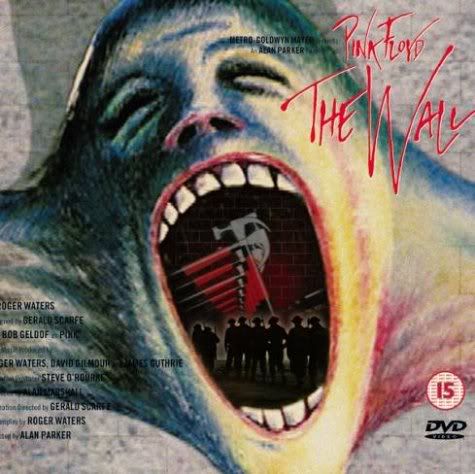
Another study designed to support an established behavioral theory. i.e. video games are bad.
Let me make a list of things I think could generate similar results:
- A bad day at work
- Traffic Jam
- Headache
- Most media I define as 'awesome'
- Pink Floyd, Slipknot, or Barry Manilow
- Dealing with agressive pan-handlers daily
- Being hungry
- Being full
- Wearing orange (don't know until you test it.)
I particularly like how the article paints the research as "
Rubbish.
-Adam!!!
Tuesday, February 24, 2009
A Simple Plan
I don't need another T-shirt. It's epic how much I don't need another T-shirt. I may NEED this T-shirt.

Phone Privilege Day at the Home

PPDatH is an old Wizards of the Coast Customer Service phrase (coined by Jeff Harris, who should contact me if he reads this. DUDE!) We used it any time the day's ration of crazy/stupid/incomprehensible callers outnumbered the sane ones. We handled rules support for Magic: The Gathering, so the 'sane' bar was already set pretty low!
Nowadays, when I handle support, I do it mostly via Email. The primary advantage to Email is the ability to step back from the insane for a moment. Once my wits are in place, I can then tackle the problem du jour with the optimistic vigor I have worked so hard to cultivate. Still, there are days...
When I first started with ourWorld, I read up on community management. There was precious little usefull information out there on how to handle a large number of online contributers*, particularly teens. Most of the attention was spent on how to *be* a member of a community, rather than how to manage one. What written help the internet could provide, proved useful. I'll share the most imporant bit:
"You are a moderator, not a therapist."
It's shocking how often this phrase helps me do the correct thing. And there you have it.
-Adam!!!
* A quick Google search for 'virtual world community management' brings up a host of articles now. No idea if they're any good. When I have time, I'll need to see.
Monday, February 23, 2009
The Transitory Nature of Things
I think there is a desire for things to be permanent, yet so much that we treasure is made even more valuable by the knowledge that its not forever.
I'm toying with the idea of a communal art-project for ourWorld, that allows players to cover up the work of the previous artists, or if left too long, vanishes with time. I love the notion that players could impact their virtual world, if only for a little while. It's just an idea, and I'll have to do some convincing to make it happen. It's not technically prohibitive, it can be monetized, and it's pretty fraking unique. Fingers crossed.
Speaking of Transitory. Here's a clip from my last robot fight. My robots were the losing pair.
-Adam
I'm toying with the idea of a communal art-project for ourWorld, that allows players to cover up the work of the previous artists, or if left too long, vanishes with time. I love the notion that players could impact their virtual world, if only for a little while. It's just an idea, and I'll have to do some convincing to make it happen. It's not technically prohibitive, it can be monetized, and it's pretty fraking unique. Fingers crossed.
Speaking of Transitory. Here's a clip from my last robot fight. My robots were the losing pair.
-Adam
Monday, February 16, 2009
Are we that?
Today's post from Seth Godin got me thinking (as they often do).
Virtual Worlds based on established brands, like Disney, have the ability to take a concrete idea/brand and ask "are we that", and if the answer is no, make adjustments. ourWorld is for teens who like games and socializing, but asking "are we that" is still too broad a question. Even though we are acting like a site for teens who like games and socializing, does that establish a recognizable identity? More to the point, does it help define who the players are?
Like I said, it got me thinking. I'll have to think about it some more.
-Adam!!!
In the case of a ourWorld, or any virtual world for that matter, there is a question of Who We Really Are. ourWorld is distinctly different than the creators had in mind when they started. That's not a bad thing because our team is fast enough and smart enough to adjust to the realities of who most of our players are and what they like. But the switch, I think, has left us less defined than we ought to be. Are we a dog or a duck. We set out to be a dog.Authenticity
If it acts like a duck (all the time), it's a duck. Doesn't matter if the duck thinks it's a dog, it's still a duck as far as the rest of us are concerned.
Authenticity, for me, is doing what you promise, not "being who you are".
That's because 'being' is too amorphous and we are notoriously bad at judging that. Internal vision is always blurry. Doing, on the other hand, is an act that can be seen by all.
As the Internet and a connected culture places a higher premium on authenticity (because if you're inconsistent, you're going to get caught) it's easy to confuse authentic behavior with an existential crisis. Are you really good enough, kind enough, generous enough and brave enough to be authentically a hero or leader?
Mother Theresa was an atheist, filled with self doubt. But she was an authentic saint, because she always acted like one.
You could spend your time wondering if what you say you are is really you. Or you could just act like that all the time. That's good enough, thanks. Save the angst for later.
Virtual Worlds based on established brands, like Disney, have the ability to take a concrete idea/brand and ask "are we that", and if the answer is no, make adjustments. ourWorld is for teens who like games and socializing, but asking "are we that" is still too broad a question. Even though we are acting like a site for teens who like games and socializing, does that establish a recognizable identity? More to the point, does it help define who the players are?
Like I said, it got me thinking. I'll have to think about it some more.
-Adam!!!
Subscribe to:
Posts (Atom)