Showing posts with label virtual worlds. Show all posts

Friday, April 30, 2010

It's Hard to Change

by Adam

We update ourWorld every other Monday, pretty much like clockwork.  That's a lot of changes, updates, improvements, fixes, and additions to a site that was pretty darned modest when it was launched on April 1, 2008.

Buzz Cafe, ourWorld, circa 2008

Things that didn't exist when we launched:
  • Gems, or anything you now buy with Gems.
  • Friends (at least not like friends are now)
  • Condos
  • Marketplace
  • Gifting in any manner
  • Chat for under 13 year old players
  • Electric Avenue, Wonderland, Soho, Nevermore, Beat Street, and the Beach
  • Crews
  • About half of the Games in the Arcade
  • Poker, Pool, nor Dance Planet
Basically, ourWorld was a flash game site with a 3d chat feature were you could dress up your avatar.  Oh my, how it has grown. 

Buzz Cafe, 2010.  Note the massive changes to the interface, including the Friend's Bar

We get massive numbers of requests and suggestions for ourWorld, and most we can't act upon.  The reasons are fairly universal for a game of ourWorld's sort, and I expect the managers of our competitors (YoVille, SmallWorlds, etc.) base their upgrade/addition decisions on similar criteria as us. 

Will this make us money?
 That's the big question.  If the answer is no, chances are we're not doing it.  We can't. Every update and improvement, no matter how small, costs the time of our talented staff, and that time costs money.  What's the return going to be on that cost?  Features that we charge for (for ourWorld that means Resident Members only or items that cost Gems, our premium currency) are an easy sell.  If the idea is cool and it will obviously generate revenue, the team rolls up its sleeves and gets to work. Those sorts of projects usually have top priority.  Our new Critter Garden fell into that category. 

That doesn't mean that every update has to actually be a direct revenue generator, with a monetary cost to our players.  Non-revenue generating improvements happen all the time, but we weigh them far more carefully before tackling them.  If we don't think the change will move the needle in terms of the overall quality of the site, player retention, and ultimately subscriptions and Gem purchases, the project will likely get a pass.  We gets lots of requests for small improvements to this or that portion of the site, and while we often agree making the improvement would be, well, an improvement, the effort involved would not drastically impact the overall quality of the site. Such incremental changes are unlikely unless they are very simple to make happen.
Example: We get requests for improved Email tools, where players can review sent messages and recover deleted ones.  Yes, that'd be super, but there's no way that impacts the bottom line.  
 It's also the reason some of the older features haven't been improved, even though we know they could use the attention.  The same effort could create a new location that would generate attention and excitement, while renovating an old feature provides far less in terms of reaction.  Bummer, but true.  On the other hand, when we discover an actual problem, like when it was hard to arrange furniture in your Condo, we redid the interface so it was far more clear.  The change was simple to make and it made a distinct improvement to the experience for all of our players.  The effort required matched up with the improvement to the site, even though a better User Interface doesn't  contribute to the bottom line in any measurable way.  General improvements do have value, they're just more modest and harder to measure.

Adam!!!
http://gameguts.blogspot.com/

Thursday, February 18, 2010

Deja What Again?

From Virtual World News:

Richard Garriott's Portalarium Aiming At A More Mainstream Second Life?

Later in 2010 the company plans to release CenterPort, "the virtual world social hub for the OpenLife ecosystem, a broad yet fully integrated meta-community." CenterPort will start as a social network app, though the company promises that it "will be more graphically advanced than what you see out there on social networks today." It will include a persistent avatar and "a semi-3D world" where users can buy virtual clothes, housing, accessories, and more. Currency can be acquired either through ad-supported mini-games or direct purchases.

Some of the development features may be new, but the general description of their product sounds, well, like another game I'm pretty familiar with, right down to the poker game.

When Ultima 3 came out, Richard "Lord British" Garriott was THE rockstar of game developers. Also, he more or less invented the MMORPG with Ultima Online.

Maybe the report is missing important details, but I don't see the innovation here. With Flash 10 coming, even moving away from Flash seems like an odd move. Still, the dude's got a worthy track record. I for one will stay tuned.

Adam!!!
http://gameguts.blogspot.com/

Wednesday, February 10, 2010

Pulling out the Rug

It's always easier to add features to a game than to take them away. A lot of games will put off taking features away until a major event, like a new edition or version, both from a practical standpoint (paper games aren't good at mid-stream changes) as well as a PR standpoint. Players hate losing things they are used to. If you wait for a big event, you add some sugar to the medicine by introducing an assortment of new features that are replacing those that are being lost.

We don't have that luxury with ourWorld, because our game gets incrementally updated every two weeks. Even a huge update is a smallish change in the overall scheme of things. This last week, we implemented a change in ourWorld that prevents players from buying gifts for other players unless they first make an actual purchase. The problem was that each coupon code for Gems (ourWorld's for-profit currency) we issued worked once for each account. This allowed one code to provide a small number of Gems to a large number of players. Free samples, more or less. The problem was that players were creating large numbers of 'fake' accounts, loading them up with free Gems from the codes, and bleeding those Gems into their main accounts. The problem reached epidemic status a couple of weeks ago when we accidentally released Gem codes worth more than the usual 10 and the number of fake accounts skyrocketed, throwing off all our statistical data for the week, and reducing the value of a single Gem to a fraction of its normal worth.

We had to make a change, and our choices were to reign in Gem Codes or reign in gifting. We think there's a lot of value in releasing a modest number of Gems each week for everyone, so we addressed gifting. The problem isn't gifting, the problem is free Gems combined with gifting. The solution turned out to be simple to implement. Players who have collected all of their Gems for free can't give gifts. Once a player contributes to the site monetarily (and there's a lot of ways to do this) they can gift normally after that, including with their free Gems.

We aren't really taking away a feature, really we're taking a way a loophole that has been badly exploited. Of course, many players don't feel that way. The ourWorld forum has erupted with complaints and polls and "how can we get ourWorld to change this back" threads. I totally understand. Players used to be able to get something for nothing, and now they can't. Even so, I've got to take a hard line with this. I know people are mad, but I've been to this rodeo before, many times, and the furor won't last. The best interests of the site and my company are my primary goal, and I know this is the correct call. It was true when the first Magic cards were banned (not a lot of fun, that) and when any game I've ever worked on was canceled due to lagging sales (BattleTech TCG, Harry Potter TCG, Clout: Fantasy...and more.) Sometimes the rug simply has to go, and there's nothing to it but to do it.

If anyone really wants to know, the gift limitation was my idea. Direct your hate mail thusly.

Adam!!!
http://gameguts.blogspot.com/

Tuesday, February 09, 2010

High Maintenance Customers


Some customers require a disproportionate amount of attention from the support team. They write or call nearly everyday, often with some sort of problem. Usually the problems are legitimate, if not a bit on the nit-picky side. The question isn't what to do with that one customer. She's a great customer, so you help her as best you can, every time. The question is whether everyone is having these same problems, and only this one great customer cares enough to tell you about them.

The question stresses me out.

It has been my experience that a small percentage of players have far more problems than the average player. I'm not sure exactly why this is, exactly. For computer games like ourWorld, it's most likely an unusual system set-up or poor internet connection, but there's no way to know for sure. Some people are a lot more picky than others as well. It's not surprising that some of the bigger spenders are also some of the most vocal about problems (I would be too!) I'm also hopeful that I'm correct that it's only a small percentage, because if lots of people are having these problems, and simply not letting us know, that's bad news.

Now that we've added a forum for ourWorld, it's easier than ever for players to share their experiences with us, and so far it's been good. We've certainly learned things we didn't know from the extra input, but nothing earth shatteringly wrong has been discovered (that we didn't already know.)

Maybe some people do have more problems than others, and that's just how it is.

Sunday, September 06, 2009

Linear Progression - Two Versions

This is a revisit of a very old series of posts I wrote back when I was focused on card games, rather than virtual worlds. For the most part, the theories are the same, though I've split and clarified them a bit. My original post from 2007 described what I here call Consumer Progression. The second group, which I'll call Engagement Progression, borrow from the original, but describe a different sort of behaviors. In both cases, people move through the progressions until they stall, reach the end, or abandon the game. Making it easy as possible for players to progress is one way to ensure a game's success.

Consumer Progression - Three broad categories that describe the spending habits of consumers. The categories form a linear progression with each consumer starting at Tourist when they first experience the game. A purchase elevates them to Customer. A habit of regular purchases may then elevate them further to Whale.

Tourist - a person who has experienced the game without paying for it. In the case of games with a freemium model, these players often make up the largest portion of the games players. Other examples of Tourists could include free trial players, player who have borrowed or
played a friend's copy, and even players of pirated copies (depending on how you look at it, and the nature of the game.)
Customer - Anyone who has made any sort of purchase, no matter how small, becomes a customer. They are a radically different animal than the Tourist for a number of reasons. The most obvious is their value. The average customer's likelihood of making a second purchase is an
order of magnitude higher than the likelihood of the average Tourist making a first purchase. Because they make up the most profitable group of players, overall, it is essential that the needs of the Customers are kept as the highest priority.
Whale - A customer that makes either extremely large purchases, or extremely regular purchases, becomes a Whale (originally a casino term for extremely rich and profitable high rollers.) A customer that keeps their subscription active, but makes no additional purchases is a
great customer, but not a Whale. If I had to pin a number on it, a Whale is a customer that purchases at least triple that of the average Customer.

Engagement Progression - Categories designed to measure how much a player cares about the game, and to some extent, how emotionally involved they are with it.

Noob - Players that have just started. They have already decided to stick around long enough to give the game a chance, so its up to the game to impress them, entertain them, and not confuse or frustrate them. Noobs typically have no emotional connection to the game, and in the case of social networking games, they are a often a source of much anti-social behavior.
Player - Most of the people playing a game are players. They like it, they come back, they may even pay (if not required to.) They don't have any use for the crutches Noobs so often require, so its the game's job to either hide them or make them clever enough to not get in the way. If a player has an emotional attachment to the game, it is either weak or directed more towards the other players in the game.
Fan - When a player becomes emotionally involved in a game, that player becomes a fan. Fans are willing to take action beyond simple purchases. Fans write blogs and manage online forums. Fans volunteer. Fans are players who have formed an emotional bond with the game.
Elite (Super Fan) - Similar to a fan, but truly, truly dedicated. The 1%'ers, though in truth, they represent less than 1% of the players. These are players who get more out of a game than the designers could have ever intended, and they typically want to contribute back to the thing that gives so much to them.

Its always dicey categorizing people, but I believe looking at these categories, it is possible to make reasonable choices about new features, costs, and services. Combine these notions with information specific to your game, spending habits Whales vs. Customers, for example, or number of players showing Fan-like behaviour vs. simple Player behavior, and decisions become easier to make, with more chance of success.

-Adam!!!
GameGuts Blog

Friday, September 04, 2009

Noob Tools

Buy-in levels: Tourist, Customer, Fan

Experience levels: Noob, Player, Elite

Levels match each other roughly (but not always)

Noob needs are more distinct than the other two. In fact, many games allow the experience between players and elite result from a gradual progression, rather than a distinct shift in the game's focus when the gamer's status shifts.

Noobs, on the other hand, often require special attention in order to progress their status to the more rewarding Player status. Typically, Players find the attention Noobs require distasteful, so those features must be hidden as soon as they are no longer needed.

This means a game requires a robust 'Noob experience' that is clever enough to conceal itself as soon as it is no longer needed. The more complex the game, the more robust the Noob tools must be.

-Adam!!!


Sunday, August 09, 2009

Free at Last


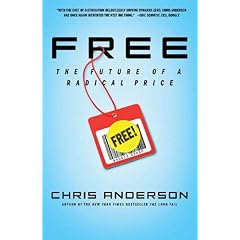
I've just finished the free audio-book version of Chris Anderson's Free: The Future of a Radical Price. While there is a fair amount of controversy regarding the book, free is the baseline price for most Web-based games, like ourWorld, Yoville, Club Penguin, and pretty much everything else in our category. In other words, we're neck deep in free, and living with the necessities, benefits, as well as the pitfalls of it.

Because free is the default base price for all of our games, the gaming public takes it for granted that the games will be free. In fact, we use the 'freemium' model, where the minority of players that do pay are supporting the vast majority who are playing for free.

The book relied most heavily on Maplestory for its gaming examples. In Maplestory's case, everything in the game could be achieved with effort. The non-free items save players time, but do not provide access to anything that the non-paying players can't achieve given time.

In ourWorld, we certainly sell items that save player time (subscribers level up 2x faster, and an assortment of non-free items can increase that multiplier even further.) In addition, there are items that the highest level players can earn with out paying, but players who don't mind paying can get whenever they choose. Unlike Maplestory, however, we have hundreds of items that only paying players have access to. These items don't do anything but impact how the avatar and living spaces look, but as looks and image is what ourWorld is all about, it's socially rewarding to have these "Gem-Only" premium items.

With free as the default price of online games like ourWorld, the challenge is really how to balance the free version of the game with the premium version. What should be free? What should cost money? When we started last year, almost everything was free. As the site matured, the ratio of free to non-free has shifted steadily toward the latter. As the players gaining benefits from this shift are supporting the site, this is not a problem at all. In addition, while growth is slower, the non-paying players still have more features than they did this time last year, even if glass-half-empty users only see the ever increasing number of features they 'unfairly' don't have access to.

I expect more and more aspects of ourWorld to become free as new non-free items are released. As non-free features age, the cost of giving them away gives way to the benefits. This happened with Condos (ourWorld living spaces) a few months ago, and the result has been totally positive for both the players as well as the bottom line of the site.

Free at last!

Adam!!!
Gameguts Blog

Tuesday, May 05, 2009

Member's Only

That's some cooooool water.


We added our first public Member's Only area to ourWorld yesterday. The players have been asking for a swimming pool since pretty much always, and we finally released a swimming area called the Beach.

Only Resident Subscribers can go there*.

As expected, there is a vocal chorus of "not fair!" from the free-play community. While I understand their reaction, it's hard to muster a great deal of sympathy from my personal perspective. Most of ourWorld is free, but new features more and more are for paying players. You know, the people who keep the site running with their dollars.

It's unfortunate how weak the free-player's position is, really. When they threaten to leave the site and never come back, the net loss to the site is usually close to zero. I wish it was a bigger deal. I wish the free-players could contribute more to the site so they could be given more in exchange.

If wishes were subscriptions, we'd all swim.

-Adam!!!

* Free players can go to the Beach if Grouped with a Resident subscriber, so it's not totally off-limits.

Tuesday, March 24, 2009

Twist and Shout!

Seth Godin once again transforms the obvious into the practical (making me wonder why it isn't easier to do.)

The pillars of social media site success

By Seth Godin

Why people choose to visit online social sites:

  • Who likes me?
  • Is everything okay?
  • How can I become more popular?
  • What's new?
  • I'm bored, let's make some noise

None of these are new, but in the digital world, they're still magnetic.

If you want to understand why Twitter is so hot, look at those five attributes. They deliver all five, instantly.

Is this everything? If not, it covers a lot. In the case of virtual worlds, making noise isn't the only solution to "I'm bored", but it's a great one. Boredom is the thing ourWorld players complain about the most, at least to each other. Perhaps they need a few more chains to bang around with. I'm not sure I've considered the ability to be heard and seen as a primary solution to the boredom problem, but it might be the key to it all.

-Adam!!!


Thursday, March 12, 2009

Want vs Need


When I worked for Wizards of the Coast, handling support for Magic: The Gathering, there was a common belief that we released too many card-sets, too rapidly. The cries were frequently forms of "You are forcing me buy too many cards, I can't keep up."

The key word..."forcing"

Even the lightest application of reason concludes that we weren't forcing anyone to do anything. Entertainment products are not a "need", they are a "want", and as such optional. We weren't selling insulin to diabetics, we were selling slips of cardboard to teenagers.

That said, the hobby game industry was the beneficiary (and possibly the originator) of what we called the Repeat Purchase Model. For hobby games, it started with Role Playing Games. You purchased the basic set, books, or whatever, and the fans were treated to extremely regular releases of technically optional, but frequently essential, supplementary material. While fans frequently grumbled about the amount they felt obligated to buy, lack of such material was considered the death of the game.

The Repeat Purchase Model was advanced into hyperdrive by the invention of the Collectible Card Game. Now a single product could be sold over and over again to a single customer. Profits could be made from casual customers and fortunes made from a relatively limited number of fanatics. By establishing a culture where the newest cards replaced, rather than supplemented, the oldest, players were compelled to keep buying lest their investment be compromised. They didn't necessarily want to buy more cards, but if they wanted to keep playing, it was required spending. A Want was transformed into a Need.

The culture that created this system was to some extent accidental. When Magic was new, the game was not perfected and the cards contained errors and flaws that would not come to light until much later. Newer editions fixed, or attempted to fix, these problems through text and rules revisions. Tournament play addressed these problems by limiting what cards would be allowed in the most heavily supported formats. Eventually, older cards and card sets were deemed to be fun, but flawed. Players that did not have access to them felt slighted when playing against those who did. Using old cards was, and is, an offense just short of cheating.

While the culture started off semi-accidentally, it has been embraced by both manufacturers and players as the status-quo. It is now expected that the first editions of a card game will likely be flawed and eventually supplanted by newer, better versions. New cards will replace old. New rules will replace old.

This culture is not without its downside. Players who feel coerced into making purchases do so cognizant of what's going on. They may be spending money now, but the product must deliver EVERY TIME or else they'll get off the merry-go-round, doubtful to return. Once off, the ride is spinning far to quickly to jump back on again with any ease. There's always a new ride (Online MMO's, anyone?) to replace the old one.

With any product, including Virtual World subscriptions, of which I am trying to apply these lessons and theories, the goal is not to make a want feel like a need. There is a backlash when a purchase is made and the perceived need falls short of expectations. Also, its hard to feel good about purchasing something you need.

Wants, on the other hand, are all about feeling good. The customer (or fanatic) is making the choice for themselves. If the product falls short of expectations, as they do from time to time, there is less backlash when the decision to buy is owned by the customer, rather than projected to the publisher.

Virtual Worlds, like Collectible Cards, are entertainment products. They are about fun, and good feelings. Coercion is not the correct tactic. Enticement is.

Want > Need

-Adam!!!

Friday, March 06, 2009

The End of Days

Every day I deactivate free ourWorld memberships. Every day I wonder why I'm doing it.

Boom, but why?

Some of our partners don't even offer the option to deactivate a free membership. You just can't. Technically we don't offer it either, but since I can do it, I do.

One player suggested she was doing us a favor, not requiring us to take up memory with her account info. I *think* the usual idea is that we jettison whatever information we have about that player, so they feel somehow more anonymous. Of course, we're not jettisoning anything, we just flip the switch so they can't see it anymore.

For a while, players were working our 'free gems' referral system by creating dummy accounts that fed into their real accounts. That's fine with me, except that a few of the players decided they wanted me to deactivate these dummy accounts for them. It's one thing to work the system for free stuff. It's another to take up my time doing it, for no reason at all. I was polite, but firm, with those players.

ourWorld is an eco-system. Players earn various forms of currency, they leave messages for one another, they become friends with one another, and the system sustains this action through the site's features. It also means the players are extremely inter-connected. It's not even possible to just 'delete' somebody, as that would throw all that inter-connectedness into chaos.

Deactivating free accounts for no good reason may be a mistake. Parents requesting thier child's account be deactivated is a legitimate request, so I'm not saying not do it at all. Potential customers may not be aware that I can reactivate the accounts, and therefore not return when they otherwise may decide to. A longshot, to be sure, but closing doors is generally bad policy.

What I'm saying is, don't expect a "Cancel Account" button on ourWorld any time soon.

-Adam!!!

Wednesday, March 04, 2009

YoVille's Got It Goin' On

Yoville Hits 6.6M Monthly Uniques Across Facebook And Myspace

With 6+Million users, no wonder it's crowded

I have to say we're looking very closely at YoVille's success. We feel ourWorld does a lot of things better than YoVille (not everything, but a lot) , and we're very excited about our upcoming Facebook launch. Hopefully, there'll be a few players left for us.

I'm looking forward to a three way battle between YoVille, ourWorld, and SmallWorlds. May we all win!

-Adam!!!

Wednesday, February 25, 2009

They Know "Comfortably Numb" is Friggin' Awesome, Right?

Violent Media Numb Viewers To The Pain Of Others


Another study designed to support an established behavioral theory. i.e. video games are bad.

Let me make a list of things I think could generate similar results:
  • A bad day at work
  • Traffic Jam
  • Headache
  • Most media I define as 'awesome'
  • Pink Floyd, Slipknot, or Barry Manilow
  • Dealing with agressive pan-handlers daily
  • Being hungry
  • Being full
  • Wearing orange (don't know until you test it.)
My point: Lots of things can impact how we react to a given situation, particularly in the short term. People are drastically impacted by their environment, and video games are a kind of environment. Have the kids play violent video games for a year and see how they act (compared to a control) a year later. That might hold some weight.

I particularly like how the article paints the research as "[filling] an important research gap in the literature on the impact of violent media."

Rubbish.

-Adam!!!

Monday, February 16, 2009

Are we that?

Today's post from Seth Godin got me thinking (as they often do).

Authenticity

If it acts like a duck (all the time), it's a duck. Doesn't matter if the duck thinks it's a dog, it's still a duck as far as the rest of us are concerned.

Authenticity, for me, is doing what you promise, not "being who you are".

That's because 'being' is too amorphous and we are notoriously bad at judging that. Internal vision is always blurry. Doing, on the other hand, is an act that can be seen by all.

As the Internet and a connected culture places a higher premium on authenticity (because if you're inconsistent, you're going to get caught) it's easy to confuse authentic behavior with an existential crisis. Are you really good enough, kind enough, generous enough and brave enough to be authentically a hero or leader?

Mother Theresa was an atheist, filled with self doubt. But she was an authentic saint, because she always acted like one.

You could spend your time wondering if what you say you are is really you. Or you could just act like that all the time. That's good enough, thanks. Save the angst for later.

In the case of a ourWorld, or any virtual world for that matter, there is a question of Who We Really Are. ourWorld is distinctly different than the creators had in mind when they started. That's not a bad thing because our team is fast enough and smart enough to adjust to the realities of who most of our players are and what they like. But the switch, I think, has left us less defined than we ought to be. Are we a dog or a duck. We set out to be a dog.

Virtual Worlds based on established brands, like Disney, have the ability to take a concrete idea/brand and ask "are we that", and if the answer is no, make adjustments. ourWorld is for teens who like games and socializing, but asking "are we that" is still too broad a question. Even though we are acting like a site for teens who like games and socializing, does that establish a recognizable identity? More to the point, does it help define who the players are?

Like I said, it got me thinking. I'll have to think about it some more.

-Adam!!!

Wednesday, January 07, 2009

The Deep End

I just received a comment about the ourWorld experience. This sort of feedback is really helpful as we try to mold our site's First Impression.

There are two factors that play off each other poorly.

  1. To provide a consistant new user experience, new users need to appear in a part of your world designed to accomodate them.
  2. When all sorts of new users appear in the same place, they tend to detract from the experience.
New users are more difficult to handle, in-game, than just about any other sort of player. They don't know what to do. They don't know what to say. If there's any kind of etiquette, they don't know it. They don't yet have a vested interest in the site or the community, so they're prone to a level of rude/crudeness that mellows as players settle in.

I like YoVille's party system, because its easy to find and it gives even the newest players a framework for discussion. TOPICS.

The ourWorld experience starts with a mission-based tutorial, but that doesn't last long, and it doesn't satisfy the need to establish communication with the other players. Those other players also don't know what to say, so its common to see a crowded room full of people not talking (or talking crap.)

I will say that once ourWorld players do make some friends, they have a lot of fun. Our loyal players are extremely loyal, and I think its because our work is paying off with a strong, entertaining, experience. (of course, I'm biased.)

No solutions today, but food for thought. That might be even better.

-Adam!!!

Wednesday, December 17, 2008

Super Tourists

When I first wrote the series of posts covering Tourists, Customers, Fans, and Super-Fans, I wasn't in the Virtual World business. Now that I am, I want to re-explore Tourists. Not just any Tourists, Super-Tourists!


Quick recap: I call the players who are using the free version of your product Tourists. They are checking it out, and maybe they'll pony up some cash and become customers. (Note: Tourist is the literal name of non-paying players in ourWorld. I don't know if that's coincidence or not. I came up with the term Tourist long before I ever heard of ourWorld.)

If you are a player with a free membership this is what you offer:
  • You might buy something and become a Customer.
  • You contribute and enhance the community, increasing the value of the game for Customers and Fans
  • You may refer other players to the game, so even if you never become a Customer, you may be responsible for someone who eventually does.
Note: A Tourist who doesn't do any of those things may be harmful to your game. Community contribution is subjective, and freeloading troublemakers can be an issue. Tourists who constantly use up the time of your support staff can also be an issue. I hate to cut anyone loose, just in case there is potential, but sometimes you have to.

Super Tourists are players who bring a lot to the table, besides their own money. They are as involved as a Super Fan, only without the check-book. They enhance the community by having a lot of friends and being fun to play with. They refer a lot of players to the site, many of whom become customers. For games where volunteers are needed, they're front and center. It's generally accepted that volunteers don't do it for the 'stuff', but for recognition. It may be that Super Tourists require more 'free stuff' than normal customers because their lack of spending limits their experience.

As I've recently posted, ourWorld has just started an assortment of reference features (click the avatar in the sidebar!) but we haven't started ID-ing Super Tourists yet. I'm not even sure how many (if any) there are. I'm going to look into it.

-Adam!!!

Tuesday, December 16, 2008

Idle Mice are the Devil's Work

"im bored"

When looking through chat logs, nothing drives me crazier than seeing that phrase. It's maddening, because it seems like we could do something, but nobody really knows what. Playstation Home just launched and the most common comment I've seen about it is that it's boring. (That and it will be good when they expand it. Why does that sound familiar?)

Virtual Worlds are, for the most part, extremely fancy chat rooms. The problem is, they look like games, so there is a sense that something more ought to be going on. But what?
  • Games - I'm beginning to think that Virtual Worlds are an imperfect fit with games. Pure gamers aren't interested in the social aspects of VWs and social players aren't all that jazzed about single player or competitive gaming. A percentage of players are interested in both, but I have no idea what that percentage is.
  • Exploration - Making a VW large enough where exploration is fun for more than a few minutes is difficult and expensive. In ourWorld, most of the 'regulars' spend most of their time in the condos (private member-only locations) rather than hob-nobbing with the noobs in the public spaces.
  • In-World Activities - This shows the most promise, and what I'm working on with ourWorld right now. Something for your character to do, that isn't really competitive, and doesn't keep the player from being social. If the social players can't chat, they tend to steer clear of that activity. Pretty vague, huh. Yes, I'm still working on the specifics myself.
  • Organized chat - YoVille has a fabulous feature where players can set a topic-specific party and invite interested players to their place. The topics range from age-specific (under 15s only), X-rated (of course), and the more mundane (Jonas Brothers Fans.) I think this is a key boredom killer, as it focuses the chat and the community rather than distracts from it.
Part of the problem for both ourWorld and (I imagine) Playstation Home is the teen audience. As stated before, a notoriously hard group to please. Still, teen players are a lot of fun if you can make them happy. OurWorld is starting to get into a groove, with regular players and a constant stream of new players (click the avatar...)

-Adam!!!

Tuesday, July 29, 2008

Virtual World vs MMO = Casual vs Hard Core?

It may be that the real difference between what we consider a Virtual World and what we consider a Massively Multiplayer Game is the sort of players that play the games, and how those players are catered to by the publishers.

I recently read an article (sorry, I no longer have the link) that made the assertion that so-called hardcore gamers are far more apt to purchase subscriptions than so-called casual gamers. Casual gamers, it said, preferred to pay using the micro-transaction type models.

While there are certainly examples of hard-core games offering micro-transaction content as well as casual games offering subscriptions, from a demographic standpoint, the division is obvious. Most Virtual Worlds are moving, at least in part, to the micro-transaction model. In just the last year, it's becoming generally accepted, despite the drawbacks, that the micro-transaction model is the strongest choice for a successful Virtual Worlds. World of Warcraft, and most hard-core MMO-type games, have settled on the subscription system as the way to go.

Hard-Core -> MMO -> Subscription Payments
Casual -> Virtual World -> Micro-transactions

No so much a rule, but a guideline.

-Adam!!!

Thursday, July 24, 2008

Tee Em Eye

Too Much Information

It's a constant battle communicating with online players. There's information they need, information they want, information they don't know they need, and information they think they don't want. Simple!

Most Virtual Worlds are complicated. The more things there are to do, the more features you offer, the more places there are for players to get tripped up. No matter how simple you make each thing, a whole lot of things results in a complex system.

Most people want to figure things out for themselves. If they need help, they'll ask for it when they need it. This has a few repercussions:
  • Features that players can't figure out for themselves are inherently problematic. It's tempting to only release simplistic features.
  • People need the right help at the right time. They're not paying attention before they try to play. They've forgotten after they've given up. That's a narrow window.
  • Engineers, designers, and programmers like to suggest demos, tutorials, and FAQs (oh, they love those FAQs). While not terrible solutions, they aren't particularly effective, either.
What a player sees when he or she skims an FAQ

For complex features, you need the thing to either ramp up complexity gradually, have a robust help system, give live tours/demos, or accept that not everyone's going to be interested enough to survive the learning curve. Is it worth it?

Yes. In fact, hell yes!

Once a player has mastered any sort of learning curve, they are more than just casually engaged. They become special. They become elite. Time is an investment, and when that investment pays off to a player, everybody wins. That's a big deal, and worth working for.

-Adam!!!

Monday, July 21, 2008

What's the diff?

What is the difference between MMO's (Massively Multiplayer Online games) and Virtual Worlds?

Generally speaking, MMO's use client side software more extensively, but many, many VW's do as well, including Second Life, the granddaddy VW.

MMO's usually have a single, overriding game element. Virtual Worlds usually revolve around a number of smaller scale flash-type games. Is that really a difference? I'm not even sure that's a valid characterization of the MMOs vs. VWs.

I really think the primary difference is one of focus. MMO's are primarily about the game, with the social aspects an important, but secondary aspect. VW's are meant to emulate the social aspects of the real work in a convenient virtual setting as their primary function. They include a game or games to facilitate the social aspects and provide something for less social players to do.

That's pretty slim. Perhaps the real answer is there is no big difference, other than that which the publishers choose to market and the fans choose to perceive. World of Warcraft is a Virtual World, but more than that it's also a MMORPG. There are RPG games in 2nd Life, but more than that, it's a Virtual World.

What do you think?

-Adam